


After Amazon: Why 2027 Growth Means Diversifying Now

Most brand growth conversations still start and end with Amazon. That makes sense if you are starting off on ecommerce but not if you are looking to scale. Amazon is without doubt the biggest marketplace in most geographies, and for a lot of categories it still is. But if you're planning for 2027 in the EU, UK or the US and your entire growth model runs through one channel, you're planning with a blind spot, and Q4 overstock makes this blind spot expensive.
1. There is a concentration problem
When one marketplace carries the majority of the revenue, Brands hand that marketplace control. Fee structures change. Ad costs climb every year as more Sellers and Brands compete for the same placements. Policy changes land with no negotiation. And if an account gets flagged for something as simple as a listing error or a suspicious return pattern, Brands lose access to their primary revenue channel overnight.
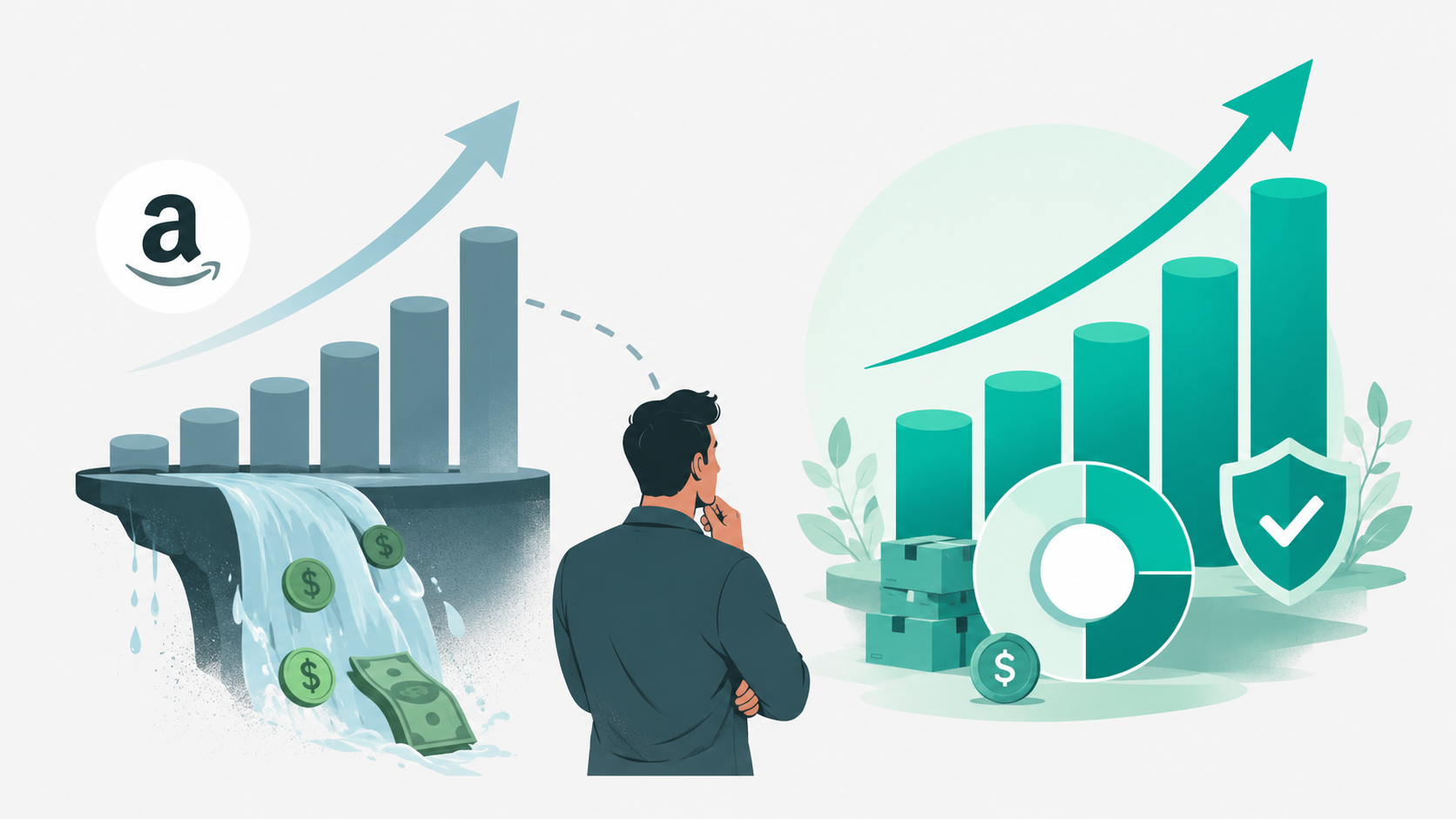
Q4 makes this worse, not better. If 80% or more of the annual revenue rides on six weeks of Amazon performance then it is a single point of failure. One stockout, one suppressed listing, one algorithm shift during Black Friday week, and the whole year moves. Diversification isn't about abandoning Amazon. It's about making sure no single channel has enough leverage over the business.
2. Leaving money on the table?
What a lot of Brands don’t realise is that the channels growing fastest right now aren't growing at Amazon's pace, they're growing well past it. Walmart's third-party marketplace GMV is up 30 to 50% year over year, and sellers using Walmart Fulfillment Services are seeing roughly a 50% lift in GMV on items tagged for fast delivery. TikTok Shop in the US grew between 68% and 108% year over year in 2025 (Tiktok does not disclose the exact figures) and is projected to clear $20 billion in 2026.
These aren't replacement channels. They're incremental audiences that the Brands are missing. TikTok Shop skews toward a younger, video-first buyer who may never open the Amazon app to discover a new Brand. Walmart reaches a value-conscious household shopper with different expectations around price and delivery speed. Every one of these channels is a chance to reach someone that the Amazon listing was never going to reach in the first place.
3. Europe has an interesting landscape
Europe is where things gets genuinely interesting, and where a lot of brands get their European strategy wrong before they even start. In the US, "expand internationally" often gets translated as "turn on Amazon in more countries." In several major European markets, that's not where the customers are.
In the Netherlands and Belgium, Bol.com is the dominant marketplace, holding roughly 78% household penetration in the Netherlands and still sitting ahead of Amazon in the region. In Germany, Otto is the strong, well-established number two behind Amazon, built around a loyal, quality-focused customer who's willing to pay more and expects a curated assortment. And in Poland, the gap isn't close at all. Allegro controls an estimated 45 to 50% of Polish e-commerce. Amazon.pl holds somewhere around 4%.
The European playbook has to be built market by market, not copy-pasted from a US-first Amazon strategy.
4. But what about inventory splits?
The operational objection we at Marketleap hear most is some version of "we don't have the inventory or the systems to run five channels at once." That's a solvable problem, and it doesn't require holding separate stock for every marketplace.
At Marketleap we work with Amazon's MCF program which lets us fulfill orders placed on Walmart, TikTok Shop, a Brand’s own Shopify store, and other channels straight out of our FBA inventory. One pool of stock, multiple sales channels. On top of that, we at Marketleap run fulfillment out of our own warehouse network across the EU, UK and US. This gives our brands a second fulfillment lane that isn't tied to any single marketplace's rules. The result is that our Brand go live on Walmart, Bol, or TikTok Shop without building a parallel inventory operation from scratch.
5. Going native on channel fulfillment
The part that actually requires strategy is deciding when to fulfill a new channel out of MCF or a 3PL, and when to move that channel onto its own native fulfillment network, Bol's LVB, Walmart's WFS, or similar. Early on, MCF or 3PL fulfillment is the right call. It lets us test a channel's demand without committing to separate inventory, separate storage fees, or a new set of compliance requirements before we know if the channel is going to work for our brand’s product.
Once a channel proves itself, the calculus changes. Native fulfillment programs like WFS and LVB carry real advantages once volume justifies them: faster delivery badges that lift conversion, better search placement, and per-unit costs that often beat third-party alternatives at scale. The tradeoff is that native fulfillment means holding dedicated stock inside that marketplace's network, which only makes sense once the order volume is consistent enough to justify it.
There's no universal volume threshold where that switch should happen. It depends on the margin structure, the SKU count, and how much of the total demand that channel represents. But it's a decision that should be made deliberately, not by default, and not after already overcommitting inventory to a channel that turned out to be a poor fit. This is where Marketleap expertise comes in. We have done this over and over again, with precision.
6. Why the decision is now, not later
Q4 planning is already forcing brands to think hard about inventory placement, freight timing, and stock levels across every marketplace they are on (see our last blog post on Q4 planning). That's exactly the moment to decide whether a channel needs to be added for 2027, because the lead times for testing a new marketplace before peak season are similar to the lead times for stocking existing ones.
There's a second benefit that gets overlooked. Channel diversification doesn't just help sell more during Q4, it helps clear what's left over after it. Brands that sell on Amazon alone often end up choosing between markdowns, removal fees, or long-term storage charges on Q4 overstock in January. Brands running multiple channels have somewhere else to move that inventory, a different customer base with a different demand curve, instead of eating the cost of getting rid of it.
The brands that will look meaningfully different in 2027 aren't the ones who found a better Amazon tactic. They're the ones who decided, now, which channel to test next and built the operational plan to support it before Q4 made that decision for them. If you're not sure which of these channels actually fits your product and your existing fulfillment setup, that's exactly the conversation worth having before Q4 locks in your inventory plan for the year. Reach out to us to see how to make channel expansions work for you.
Related posts
.svg)




.png)
.png)